
Applications of White Fused Alumina in Wear-Resistant Coatings
Introduction
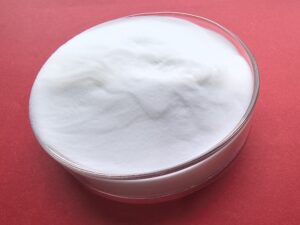
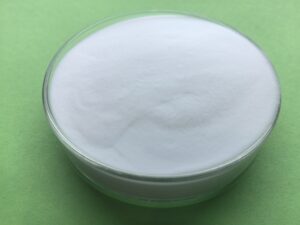
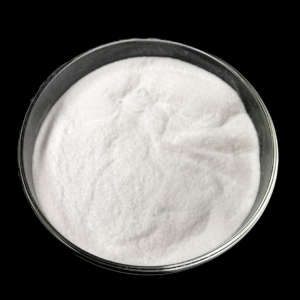
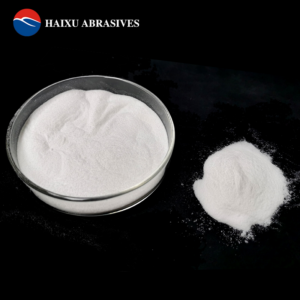
White fused alumina (WFA) is a high-performance abrasive material produced by smelting high-purity alumina in electric arc furnaces at temperatures exceeding 2200°C. With a Mohs hardness of 9.0, excellent chemical stability, and a distinctive white appearance, white fused alumina has become a widely used functional filler in wear-resistant coatings across various industries.
1. Enhancing Wear Resistance
White fused alumina serves as a hard filler that forms a robust skeletal structure within the coating matrix. Its angular, sharp-edged particle morphology effectively resists scratching, abrasion, and mechanical impact. When incorporated into epoxy, polyurethane, or acrylic coating systems, it significantly improves the coating’s ability to withstand friction and wear. Test data shows that coatings containing 15-20% white fused alumina exhibit 30-50% higher wear resistance compared to unfilled systems, making it ideal for high-traffic industrial floors and heavy machinery coatings.
2. Improving Corrosion Protection
White fused alumina is chemically inert, offering excellent resistance to acids, alkalis, and various corrosive media. When uniformly dispersed in the coating, its particles fill micro-voids and create a dense barrier that effectively blocks moisture, oxygen, and aggressive chemicals from reaching the underlying substrate. This property is particularly valuable in marine coatings, chemical plant equipment coatings, and offshore platform protective layers, where long-term corrosion resistance is essential.
3. Providing High-Temperature Stability
With a melting point of 2050°C, white fused alumina maintains its structural integrity even under extreme thermal conditions. It does not decompose or react with most materials at elevated temperatures, making it suitable for high-temperature resistant coatings used in exhaust systems, industrial furnaces, and engine components.
4. Enhancing Coating Adhesion and Mechanical Strength
The angular shape of white fused alumina particles promotes mechanical interlocking between the coating and substrate, significantly improving adhesion strength. Additionally, the inherent hardness of the particles contributes to increased compressive strength and impact resistance, reducing the risk of coating failure under mechanical stress.
5. Maintaining Aesthetic Appearance
Unlike darker abrasives, white fused alumina’s pure white color makes it ideal for light-colored or decorative coatings. It can be incorporated into architectural coatings, floor paints, and food-contact coatings without compromising the final appearance or color consistency.
Key Application Scenarios
| Application Area | Specific Uses | Key Benefits |
|---|---|---|
| Industrial Flooring | Warehouses, factories, parking decks | High wear resistance, anti-slip |
| Marine Coatings | Ship hulls, decks, offshore platforms | Corrosion resistance, durability |
| Chemical Equipment | Storage tanks, pipelines, reactors | Acid/alkali resistance |
| High-Temperature Coatings | Exhaust systems, furnaces, engines | Thermal stability |
| Architectural Coatings | Exterior walls, decorative finishes | UV resistance, color retention |
| Non-Slip Coatings | Ramps, walkways, stair treads | Enhanced friction, safety |
Particle Size Selection
| Particle Size | Application | Characteristics |
|---|---|---|
| 1-10 μm | Thin coatings, high-gloss finishes | Dense, smooth surface |
| 10-30 μm | General wear-resistant coatings | Balanced performance |
| 30-100 μm | Heavy-duty coatings, anti-slip surfaces | Maximum wear resistance |
Recommended Addition Level: Typically 10%-25% of total coating solids, depending on the resin system and performance requirements.
Application Considerations
-
Dispersion: High-speed dispersion or ball milling is recommended to ensure uniform particle distribution.
-
Compatibility: White fused alumina is compatible with epoxy, polyurethane, acrylic, and silicone resin systems.
-
Surface Treatment: Silane coupling agents may be applied to enhance compatibility with organic resins.
Conclusion
White fused alumina plays a vital role in wear-resistant coatings due to its exceptional hardness, chemical stability, high-temperature resistance, and aesthetic versatility. From industrial flooring and marine protection to architectural finishes and high-temperature applications, it has become an essential functional filler for formulations demanding superior durability and long-lasting performance. As coating technology continues to advance, the applications of white fused alumina in wear-resistant systems are expected to expand further.